


The good news: an online rumor that China is censoring air pollution warnings that made the rounds overnight has turned out to be false.
The bad news: the buzz around this issue has revealed that there are overlapping bureaucratic kinks in the three-year-old air warning system that have still not been entirely worked out.
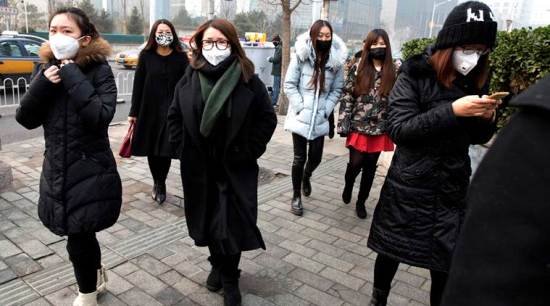
Public fears over air pollution peaked Monday night when a government memo appeared on Chinese social media. Without providing any context, the memo stated that meteorological departments all over the country should immediately cease issuing air pollution forecasts and alerts.
It would take another day until the rumors were quashed. An unidentified worker with the China Meteorological Administration, which had given the order, told The Paper that the memo was an internal government document designed to eliminate confusion over different ministries issuing different air quality alerts.

The worker elaborated: smog warnings issued by China’s meteorological departments and its environmental protection ministry are different. To rectify this difference, the two separate government institutions are now collaborating on a new system that will issue a single unified smog warning.
That’s right: the Chinese public has been receiving different smog warnings from different government departments.
During last month’s smog attack, the Beijing Meteorological Service posted an Orange Alert for Haze while the Beijing Department of Emergency Management simultaneously issued a Red Alert for Smog.
Confused? Well, there’s an explanation for this: the two alerts are different because they are based on different criteria, issued by different agencies with different hierarchies.
Warning issued by Chinese meteorological departments are based on visibility, PM 2.5 readings and humidity. On the other hand, the Beijing Emergency Management department base their warnings solely on the Air Quality Index (AQI).
The differences don’t end there. Local weather stations base their alerts on “suggestions” issued by the national weather bureau, whereas the Beijing Emergency Management department issues smog alerts when mandated by the local environmental protection bureau.
And then there is the issue of semantics. In the Chinese media, the words “air pollution” and “smog” are not mutually exclusive — the term for smog (雾霾 wumai) is made up of two charcacters — 雾 wu meaning fog or mist, and 霾 mai meaning haze — while together they mean smog. So even though a “haze” alert issued by the Beijing meteorological department certainly means its smoggy outside, it tells you how far you can see instead of what you are breathing.
Rumors that smog warnings have been censored in China aren’t so far-fetched considering it has happened before.

In 2012, China’s deputy minister of environmental protection warned foreign embassies against independently publishing local air quality reports. The order was directed at the US embassy in Beijing which had persistantly tweeted hourly air quality reports since 2008.
But despite attempts to surpress infomation over air quality, public awareness over air pollution grew throughout China. Beijing’s poor air quality was publicly exposed when a national air quality monitoring system was established in 2013, but it would take another two years until a red alert was finally issued for China’s capital.
Authorities have often taken a heavy-handed approach to air pollution in Beijing. When it wasn’t warning foreign governments against publishing smog reports, China improved air quality in Beijing by implementing emergency policies that stopped pollution from being created.
To ensure blue skies for international events like the 2008 Summer Olympics or the 75th anniversary of the end of World War II, Beijing shut down local factories and restricted car use in the city by nearly half.
As much as the public would benefit from a unified system for determining poor quality air, there is still little consensus as to what that is. In fact, in the years since China began publishing air quality reports, the standard of what constitutes “poor quality” air has consistently changed.
Although pessimists are always first to believe the worst about China, it turns out that this smog warning censorship rumor is false. Instead, this is simply a bureaucratic nightmare that shows no signs of ending.
More stories by this author here.
Images: Skynews, CBC News, Indian Express, Al Jazeera