


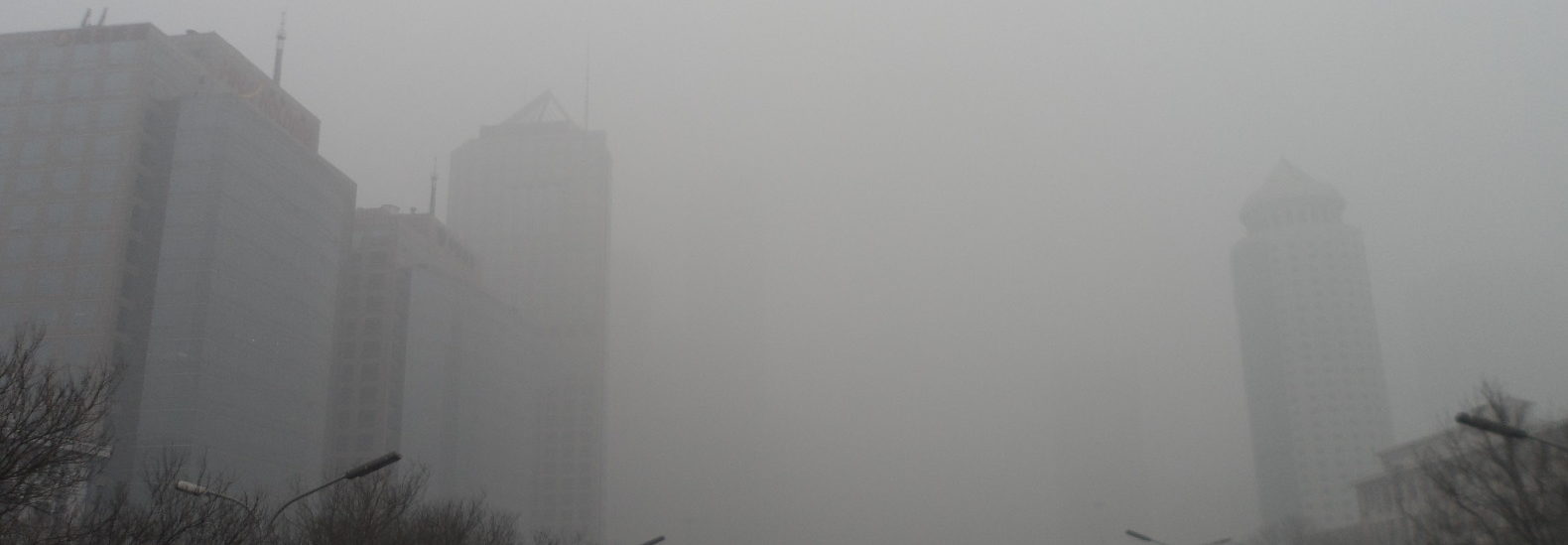
Beijing will spend RMB 18.2 billion (USD 2.6 billion) on pollution alleviation in 2017, although the municipal government has only set its PM2.5 air quality goal at an average level of 60, over twice the level recommended by the World Health Organization (WHO).
The government indicated that it will limit the use of diesel vehicles within the Sixth Ring Road; removing 300,000 older vehicles from the road; and building 3,000 more electric car charging stations around the city. We don’t really see how that adds up to RMB 18.2 billion, but um, ok.
The government also set an average PM2.5 level of 60, whereas the WHO standard is 20-25. “‘We will work hard to keep PM2.5 at an annual average of around 60 micrograms per cubic meter,'” Beijing Mayor Cai Qi told state-run media.
Beijing reported that the average AQI reading in 2016 was 73, against a target of 76.6.
The city is planning to move more factories out of or away from the city. But we still think that a key part component that’s missing from any anti-pollution effort is traffic control, namely odd-even restrictions, instead of the current two numbers per day limits.
Beijing has also set a population goal for the city of 22 million this year, also seen as a way of keeping pollution under control. The municipal government has allocated for RMB 10 billion for such initiatives, including continuing to move “manufacturing, logistics, and wholesale markets” out of the city, along with ongoing efforts to relocate city government buildings to Lucheng, east of Tongzhou. The city hopes to cap the population at 23 million by 2020.
More stories by this author here.
Email: [email protected]
Twitter: @greatwriteshark
Weibo: @SinoScuba潜水
Photo: Inhabitat
