



A Beijing scenic area is under fire for holding a firefly festival that critics say could be causing irrevocable damage to the environment.
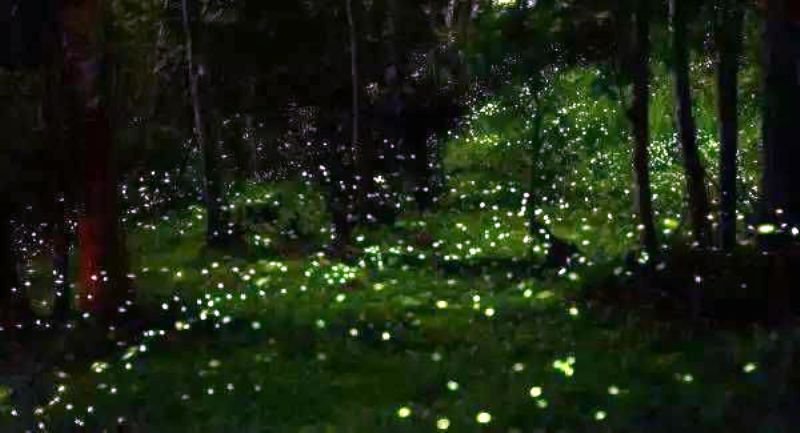
Since July 7, the Tiankai Huahai scenic area has been hosting an “ecology tourism culture festival.” After paying an 80RMB admission fee, visitors can enjoy basking in the bioluminescent glow of thousands of fireflies at the scenic area, located in Beijing’s southwestern Fangshan District.
Drawing associations with romance and innocence, fireflies have proven to be a big attraction throughout China. Local TV news reported the Huahai festival received an enthusiastic welcome from parents who lauded it for being “educational.” Meanwhile, travel retailer eLong advertises the Huahai firefly festival as “an unmissable event” that evokes “reflections of childhood.”
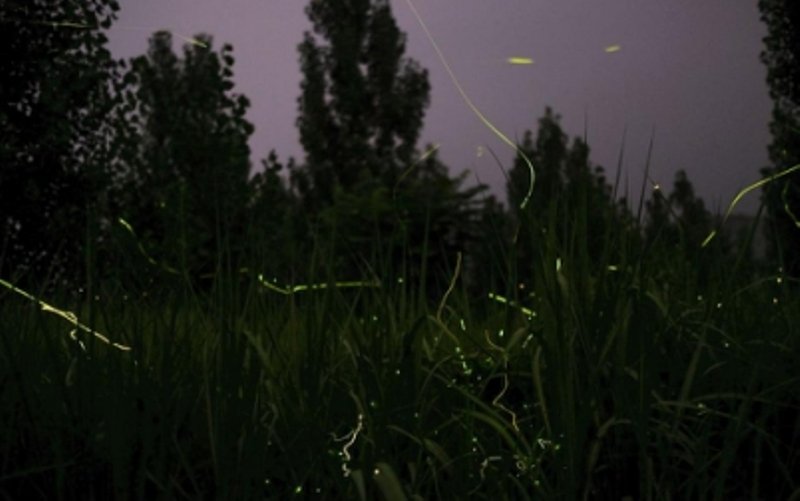
Unfortunately, the public demand for lightning bugs is putting ecological systems throughout the country at risk. Critics say because fireflies are not indigenous to Beijing, events like the Huahai festival are exploiting ecosystems of other parts of China for their fireflies.
A customer service rep for the Huahai scenic area maintains that the fireflies featured at its festival are all naturally-occurring. And yet, the Beijing News quoted a man at the scenic area who said he was personally responsible for raising the festival’s star attraction.
“It took me two years to breed hundreds of thousands of fireflies, each at a cost of ten yuan each,” said the unidentified man, who also pointed to a nearby location and said, “There are two firefly breeding areas over there.” However, the Beijing News and an environmental protection advocacy group were unable to locate these areas.
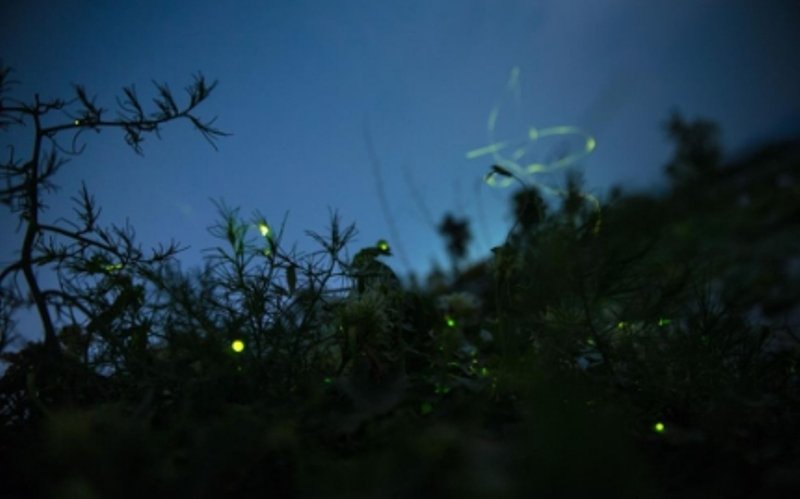
The Firefly Environment Alliance founder Yue Hua said he was skeptical of the existence of a firefly breeding farm in Beijing. Yue says that not only is large-scale firefly breeding difficult and in need of special conditions, but that it is also not suitable for northern ecological systems.
Huazhong Agricultural University department of botany Professor Fu Xinhua described fireflies as being “functionally extinct” in Beijing, and that they are instead more commonly found in China’s humid southwest.
Critics say the festival simply ships in fireflies captured in other places. As the Beijing News reports, one unidentified man said he helped provide some of the 50,000 fireflies that were released there recently, even showing off an unsold jar that contained some 3,000 fireflies.
Catching fireflies isn’t all that difficult. “Farmers in Ganzhou [in Jiangxi] found out that glowing motorcycle lights can imitate the courting signal of female fireflies. Many people have used this trick to hunt for more fireflies,” said Professor Fu, who cautioned that the consequences for poaching are dire.
“Such traps can vastly reduce the number of male fireflies available to mate, and can therefore affect an entire population’s genetic diversity. It could even mean that some populations die out entirely,” said Fu.
When speaking about a firefly-themed event in Hebei, Yue said the captives are subjected to a death sentence upon release. “At least 10,000 fireflies are used in each show … but all perish afterward due to their short survival time – which ranges from seven to 15 days – and their natural inability to adapt to urban environments,” said Yue.
The short longevity of fireflies doesn’t deter their sales. At the Huahai firefly festival, visitors can purchase a jar containing eight or nine fireflies for 35RMB. Sellers advertising their wares say the fireflies can last up to nine days if kept properly.
Although firefly parks and festivals have enjoyed tremendous popularity throughout China with openings in Shanghai, Xiamen, and Hubei, a growing public awareness has dampened enthusiasm for the once-growing trend.
This past May, a park in Wuhan agreed to stop featuring fireflies and replace them with lasers. At around the same time, Taobao banned the sale of live fireflies on its e-commerce platform.
More stories from this author here.
Twitter: @Sinopath
E-mail: [email protected]