



Stories are all around us, waiting to be told. The next time you are crossing a busy street or taking a stuffy subway, imagine the concentration of stories within one square meter: the dusty workers lounging on all of their belongings, sweaty men in suits, and girls in socks and high heels. Two almost-local Beijingers teamed up with that philosophy in mind for a project called “Portrait of a Beijinger.”
The series of four videos follows seemingly ordinary Beijingers with extraordinary stories to tell. The videos were created by longtime wordsmith Tom Fearon and videographer Abel Blanco. In addition to the videos, which range from 10 to 16 minutes, the producers have also written essays and taken photos of each of the featured Beijingers. Even though the project was released back in 2014 and the creators have not since contacted the subjects, it still bears relevance to today’s Beijing. We spoke to one of the authors of the project, Tom, who is currently back in Australia.
What inspired the project? What is your relationship with Beijing?
In 2014, Abel and I met when we both started working at an international school. As a newcomer to China, he had much of the enthusiasm and creative drive that I had lost over five years working in state media. He was shooting short videos in his spare time, often beautiful montages of city scenes or travelogues. The idea soon came to team up and interview locals for a series, profiling each subject through words, photos, and film.
Abel came up with the title “Portrait of a Beijinger” and we started working on it over weekends. I knew that my time in Beijing was winding down, so I was glad to be involved in something that explored the unique character of the city’s people. Even as a laowai, I feel a certain kinship with Beijingers. They are warm, direct, good-humored, hard-working, passionate, and resilient – and we wanted to capture some of those traits.
Abel and I both enjoyed the creative freedom of the project, especially not having time, commercial, or editorial constraints. Even though we didn’t earn anything and each episode involved many hours of writing, editing, shooting, subtitling, and so on, it was a rewarding experience and the feedback we received was very positive.
Were the Beijingers willing to open up in front of the camera?
Yes. I think it helped that we showed a genuine interest in their passion and story. Each interview began on our subject’s area of expertise – Peking opera, vintage cars, etc. – to build rapport before exploring a more personal angle.
Which subject was the hardest to find common ground or connect with?
There wasn’t much common ground between us and any of our subjects, but that didn’t hinder our connection.
How did you choose the subjects? Was it someone you knew personally?
I used to work as a copy editor for a state-run newspaper, during which time I worked on many stories about interesting Beijingers. In many cases, I felt the stories were limited by print as a medium and not always adequately explored due to deadline or censorship constraints. It was only when I mentioned these stories to Abel that he suggested they could be worth revisiting in a film.
I contacted my old reporter colleagues, who then connected me with the subjects via Weibo, email or WeChat. I thought our original pitch to our first subject Liu Xinran (the Peking opera performer) would be tricky because we didn’t have a “publisher” or media organization, but fortunately, he agreed. Thereafter, it became easier because we had videos we could share to subjects to show the style and tone of our work.
Any ideas for future collaborations of a similar kind?
I’ve recently moved back to Australia, but Abel is still in China and producing great videos.
Episode 1: Beneath the Makeup
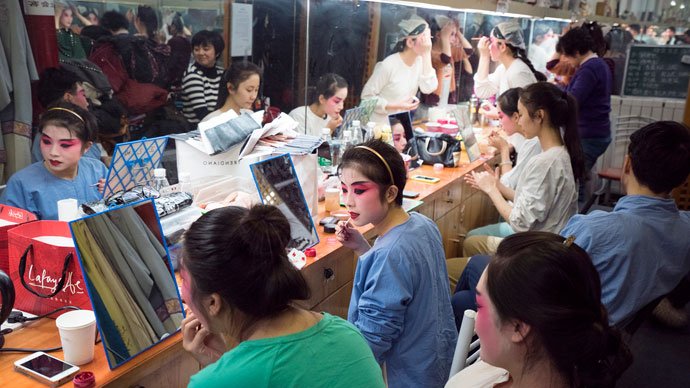

The first video in the series follows a self-taught Peking opera singer Liu Xinran. Starting with the frames of him putting the costume make up on, Liu is clearly stunning without makeup as well: high cheekbones, narrow chin, and smooth skin radiate from the screen as you listen to his soft voice talk about his passion for Peking Opera. Besides Peking Opera, Liu enjoys collecting newspapers and limited edition Coca-Cola cans, that serve as reminders of places he went to perform or travel.
Episode 2: Call of Duty
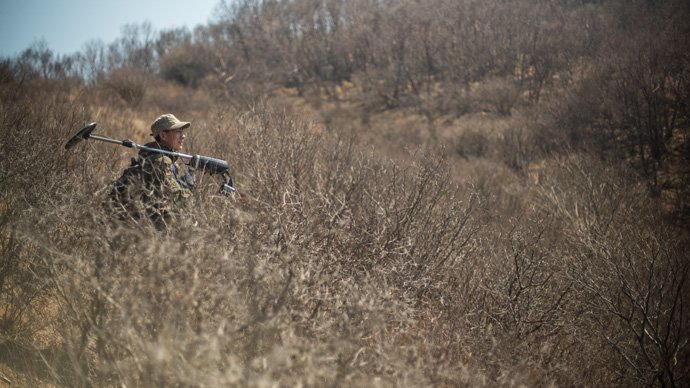

The second episode in a series focuses on deli owner and an amateur historian Yang Guoqing, who accidentally discovered the remnants of the historical Battle of Nankou (between China and Japan) while camping at the highland site. Nankou is currently mostly known for its incomplete and abandoned Wonderland amusement park. However, beyond the once-shiny and promising exterior, the history of Ming dynasty Changyucheng village beckons for further exploration. Yang Guoqing says he currently has around 3,000 relics, which he displays in a basement museum under his deli, collected during his trip using a metal detector. He mysteriously said that the presence of spirits is sometimes felt in those grounds, where the battle claimed the lives of around 15,000 Japanese and around 6,000 of Chinese soldiers.
Episode 3: Raise the Red Flag

Luo Wenyou says that Chinese car brand Hongqi is the soul of China. He opened a museum of classic cars back in 2009 to share his collection of more than 200 vehicles with the public. It is located in Huairou district, comfortably close to the movie studio that rents the cars for shooting period-piece movies and TV shows. The issue comes when your passion is not collecting something as cheap as match boxes or postcards, and storage and maintenance for his collection are costly. The museum also carries a strong spirit of patriotism, with plenty of Chinese flags and Luo’s portrait with a handwritten caption: “Chinese dream, my dream.”
Episode 4: Woman of Tai Chi


The last episode in the series talks about a member of the Beijing Wushu Team, Lü Yan, and the importance of tai chi. The Beijing Wushu team was the first formed after the Cultural Revolution and has won National Championships for 10 consecutive years. Filled with slow shots of Lü Yan practicing tai chi in a wooded area, the episode transmits her relaxed focus and concentration when she talks about her memories of intense training with the team.
The full episodes are available on Youku (VPN off):
Episode 1: Beneath the Makeup
Episode 2: Call of Duty
Episode 3: Raise the Red Flag
Episode 4: Woman of Tai Chi
or on Vimeo (VPN on):
Episode 1: Beneath the Makeup
Episode 2: Call of Duty
Episode 3: Raise the Red Flag
Episode 4: Woman of Tai Chi
More by the author here.
Images: Abel Blanco